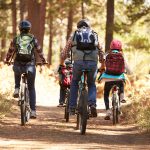
Thinking about getting your child cycling to school? The school run can be a great way to build more physical activity into their routine, spend more time together, and reduce reliance on the car. With the new school year approaching, now is a great time to get your child’s bike ready, plan a safe route and help them build confidence before their first ride to school.
In this guide, we’ll explore the benefits of cycling to school, what your child needs for a safe and comfortable journey, and how to prepare them for riding to and from school.
What are the benefits of cycling to school?
Cycling can be a fun and practical way for children to get active as part of their everyday routine. In fact, children aged 5 to 18 should aim for an average of at least 60 minutes of moderate or vigorous physical activity activity each day.
Other benefits of cycling to school include:
- More daily physical activity: Cycling can help children build exercise into their everyday routine.
- A fun alternative to the car: Turn the school run into an active part of the day rather than a journey spent sitting in traffic.
- Building confidence and independence: Regular cycling can help kids become more familiar with their local area while developing their balance, riding skills and confidence.
- Less congestion around schools: Choosing a bike instead of the car can help reduce the number of vehicles around busy school gates.
- Lower travel costs: Once you have a suitable bike and the right equipment, cycling can be a cost-effective way to travel.
- More time together: Cycling with your child can be a great opportunity to spend time together outdoors.
What does your child need to cycle to school?
Before your child sets off on their first school run, ensure they have a bike that’s the right size, a correctly fitted helmet, and the safety equipment they need to stay visible and comfortable as darker nights arrive.
The right-size kids’ bike
Choosing the right bike size is important for your child’s comfort, control and confidence. A bike that’s too big can be difficult to handle, while one that’s too small may quickly become uncomfortable as they grow.
Our kids’ bike size guide can help you find the right size based on your child’s height and other measurements.
Once you’ve identified the right bike size, explore our range of kids’ bikes to find the right fit suited to your child’s age, riding style, experience and preferences. From everyday kids’ bikes to junior mountain bikes and BMX bikes, there are plenty of options for young riders.
Make their bike feel more like theirs or encourage reluctant riders by personalising it with accessories such as streamers, baskets, doll seats and more.
A correctly fitted bike helmet
A properly fitted helmet is an important part of your child’s cycling kit. A proper cycle helmet should conform to current regulations, be the correct size and securely fastened.
A kids’ cycling helmet that’s too large or too small can be uncomfortable and may not provide the required levels of protection. There should be two fingers worth of space on their forehead, with the helmet sitting level, to protect the forehead and maintain clear vision.
The helmet side straps should form a V below each ear, while the chin strap must sit snug but comfortable, with one finger’s worth of space between it and their chin.
For more information, check out our guide to choosing a child’s bike helmet.
Clothing and visibility
As darker mornings and evenings draw in, your child might find themselves cycling in low light. Choosing kids’ cycling clothing and accessories that help them stand out can make them easier for other road users to see.
In daylight and poor light, light-coloured or fluorescent clothing can help your child stand out. In darker conditions, reflective clothing or accessories can make them more visible to other road users.
if your child cycles in the evening or after dark, their bike should be fitted with a white front light and a red rear light.
Additional protection is available including knee and elbow pads and padded gloves. We carry many exciting bike accessories that boost visibility including spoke lights, horns, and front and rear lights and reflectors.
A way to carry their school bag
A school bag can easily become distracting or difficult to carry when also trying to control a bike. To make carrying school essentials easier, a reliable backpack can help them maintain their balance and keep their hands free.
Alternatively, a dedicated bike bag can help carry kit comfortably, offering a weatherproof option to keep books and pens protected from autumn weather. For smaller items, a bike basket can make carrying things like lunchboxes and other school kit easier.

How to choose a safe cycling route to school
The quickest route isn’t always the best route for a young cyclist. When planning your child’s school run, look for a route that’s suitable for their age, confidence and cycling ability. To make the school run safer, where possible:
- Choose quieter roads and cycle routes.
- Look for cycle lanes and cycle tracks.
- Avoid busy or complicated junctions.
- Consider that traffic may be heavier around school-run times.
- Choose a route that’s manageable for your child’s cycling ability.
- Don’t be afraid to take a slightly longer route if it’s quieter and more comfortable.
Practise the school run together
Before your child’s first cycle to school, try the route together at the weekend. This gives you an opportunity to identify any difficult junctions, crossings or busy sections without the pressure of getting to school on time.
Not every child or route will be suitable for independent cycling. If your child is nervous or reluctant to ride to school, start with small steps. You could begin with one cycling-to-school day a week or even ride with them as they build their confidence.
Teaching your child essential road safety skills
If your child’s route takes them on or near roads, make sure they’re confident with the basics of safe cycling before they set off.
Help them practise:
- Starting and stopping safely.
- Looking around before moving off, turning or changing position.
- Checking for traffic at junctions and crossings.
- Riding predictably and being aware of other road users.
- Watching for hazards such as parked cars, potholes and opening car doors.
- Following road signs, markings and traffic signals.
- Staying focused on their surroundings rather than using distractions such as phones, headphones or eating while cycling.
Finally, going through some simple hand signals can be very useful for safety and building their confidence.
- Turning left: Extend the left arm horizontally whilst remaining in line with the shoulder.
- Turning right: Extend the right arm horizontally whilst remaining in line with the shoulder.
How to keep your child’s bike secure at school
If your child will be leaving their bike at school during the day, find out whether the school has dedicated bike racks or another secure storage area.
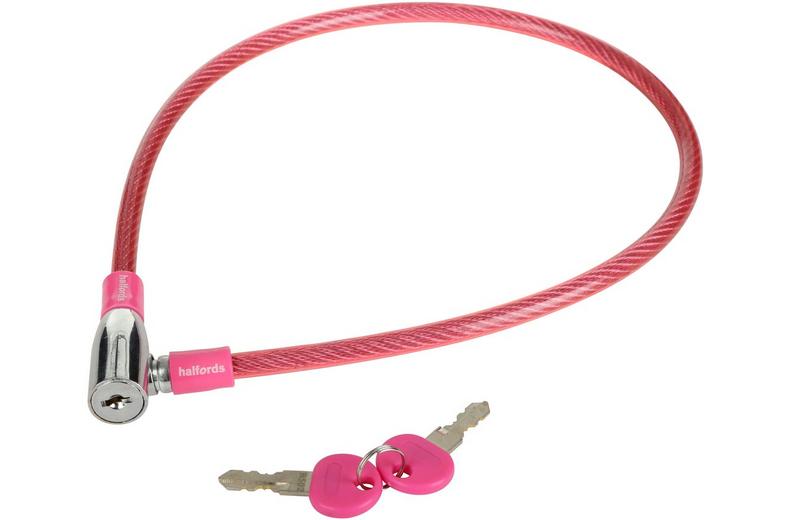
A bike lock can help secure their bike while they’re in class. When locking the bike, use a secure cycle stand or other suitable fixed object and make sure the lock secures the bike properly.
For younger children, a simple lock such as the Halfords Essentials Kids Bike Lock can be a straightforward option to use at school. It comes with a matching key fob, and is available in a choice of colours.
With a 2-year guarantee across Halfords products and services, including Apollo, Boardman, Carrera, Voodoo and more, you can shop with confidence, knowing extra cover is available if something goes wrong. Whether you’re buying a product online, booking an in-store fitting or having work carried out at one of our garages, our guarantee covers you for 2 years or 24,000 miles, whichever comes first.
T&C: 2-year/24,000- mile guarantee requires registration. Visit Halfords.com (Halfords.ie for ROI) for full T&Cs and restrictions.
Cycling to school can be a great way to help your child stay active, develop confidence and enjoy more time outdoors. With the right bike, safety equipment and a suitable route, you can help make their school run a positive part of their daily routine.
Explore our range of kids’ bikes and kids’ cycling accessories to help your child get ready for their next ride to school.