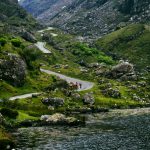
When preparing for a road trip around Ireland, it’s vital to ensure your vehicle is safe and legal by completing safety checks and routine servicing. However, it’s also wise to stock up on some essential travel equipment, from chargers and bike racks to sat navs, to ensure you get the most out of your trip.
A road trip is a great way to customise the route to your liking, so that you can visit all the attractions on your list, from Dublin to Dingle. To make your visit as smooth, convenient, and enjoyable as possible, there are a few bits you can grab (out of the shed or from your local Halfords) to maximise your chances.

How to prepare your car for long journeys
Inspect your tyres
One of the most important factors in car travel is your tyres – you wouldn’t get anywhere without them! You should always check your tyres regularly, depending on mileage and your driving style, but it’s especially important before a big journey.
- How to check tyre pressure?
Your tyre pressure needs to match the manufacturer’s recommended PSI so that they can provide sufficient grip, a short stopping distance, and a better fuel economy.
You can check your tyre pressure using:
- A tyre pressure gauge.
- A petrol station air pump with a built-in tyre pressure machine.
- Your tyre pressure monitoring system (TPMS) will warn you when tyre pressure drops below a set threshold via a light on your dashboard. You would then need to manually check your tyre pressure using a gauge.
Remember that you should only check your tyre pressure when the tyres are cold for an accurate reading. You should also check each tyre individually as the PSI can vary, especially if there’s hidden damage.
- How to check tread depth?
Your tyre tread helps to channel water away and prevent hydroplaning or skidding, as well as provide further road grip. In Ireland, the minimum legal tread depth for cars is 1.6mm, although it’s generally recommended that your tread should be at least 3.0mm.
For the highest accuracy possible, you can use a tread depth gauge, which gives you the exact millimetre measurement of how much tread you have left.
You should check multiple areas around your tyre, as spots can wear unevenly – especially if your tyres are under- or overinflated!
Book a car check today for a professional inspection of your tyres for peace of mind.
Test your brakes
An essential way of staying safe on the roads is ensuring your vehicle has fully responsive brakes. Carry out some simple and quick checks before setting out on your adventure for peace of mind.
How to test your car brakes?
- Press the brake pedal: it should feel firm rather than spongy or soft. Turn the engine on and press the brake again to ensure consistency.
- Perform a test in a quiet area – drive and brake. Your vehicle should stop promptly and not veer to one side.
- Listen out for squealing or grinding when braking, as this suggests your brake pads are worn.
- Make sure your brake fluid reservoir is filled to an optimal level.
On the topic of fluid levels, top up all of your essential oils before a long trip to protect and preserve your engine and ensure your vehicle’s optimal performance!
How to improve driving visibility
For both safety and legal reasons, give your windshield a quick clean and fix any chips as these can easily spread and disrupt your vision. While you’re at it, check your wiper blades over.
Signs of worn wiper blades include:
- Streaks or smears left across the windshield.
- Squeaking noise due to wear, dirt, or incorrect arm pressure.
- Visible chunks or splits on the rubber.
Depending on when you visit Ireland, darker mornings and evenings are likely. As many areas of Ireland are rural, they also have long and winding roads, so your car lights are vital.
Switch your headlights, indicators, and brake lights on, and get a passenger to walk around your vehicle to see if they’re all functioning. If a bulb is out, you should absolutely get it replaced before your journey starts.
Alternatively, if all of your lights and/or electrical systems appear dim, flickering, or weak, this could indicate an issue with your car’s battery. You can use a multimeter to quickly check your battery health at home.
Book a car safety check
For professional peace of mind, pop by your local Halfords store for a full 10-point car check. The vital checks carried out include:
- Headlight & brake light check.
- Wiper blade condition check.
- Battery health check.
- Tyre depth check.
- Tyre inflation check & top up.
- Windscreen chip check.
- Oil level check.
- Screen wash top up.
- AdBlue & coolant check.
Otherwise, you can get a FREE 5-point safety check, which includes a battery and wiper blade condition inspection, to check whether you’re driving safely with no cost to you.

Must-have items to pack for a road trip
How to make extra space in your car
When heading out on a road trip to see more of Ireland, you’ll want to get the most out of the natural scenes with a bike ride. Bring your bikes along for the journey with a bike rack and see hidden gems, tucked-away beaches, and tiny towns that you may struggle to access in a car.
Otherwise, if you’re exploring, maybe with the kids or dog, you’ll probably need a bit more space for your stuff – especially if you’ll be travelling for a few weeks. A roof box is the perfect solution for more car space, as you can easily install it on the top of your vehicle.
Pack for any emergency
When considering what to actually bring with you on your road trip, plan for any occasion. You’ll want to keep plenty of layers and waterproofs in your car in case the weather conditions change, which is very likely in Ireland! Snacks and fluids to rehydrate are also always a good idea to keep on hand when exploring.
In the event of a breakdown or emergency, keeping a kit for the situation could be a lifesaver. A first aid kit is an easy addition, while all drivers should strive to keep a breakdown kit in their vehicle, even if you aren’t out on an adventure!
Plan your route around Ireland
Irish landscapes to visit
Ireland has plenty of attractions and natural scenes that you shouldn’t miss on your journey round. Some of our favourites include:
- Inishowen Peninsula, County Donegal
The final trailhead of the Wild Atlantic Way, which stretches over 2,500km with atmospheric sea views, the Inishowen Peninsula is the northernmost point of Ireland! Remote and rugged, it offers quiet attractions like Banba’s Crown and Culdaff Beach.
Top Tip: If you travel through late autumn to early spring, you’ll be in with the best chance of spotting Inishowen’s northern lights!
- The Rock of Cashel (or St. Patrick’s Rock)
If you’re passionate about history, The Rock of Cashel in the Golden Vale holds the most impressive group of medieval buildings in the whole of Ireland. With a 15th-century Tower House, a Gothic cathedral, an abbey, and more, the site remarkably dates back to the 4th century and the Kings of Munster.
- Dingle, County Kerry
This stunning seaside town is located in western Ireland and is loved for its beaches and scenic hikes. Explore some pubs in the town centre or take a drive along the Slea Head Loop.
Top Tip: Ireland’s most famous ice cream – Murphy’s- originated in Dingle! With fresh ingredients from local farmers, treat yourself to this delicious treat and explore local culture all in one!
Navigate your trip with ease
Using a sat nav
Ireland can be difficult to navigate, whether you live locally or are visiting from abroad. Sudden thick fog can make seeing tiny junctions or roundabouts harder, while road signs featuring Gaeilge can confuse even Irish drivers in unfamiliar or new locations.
If you’re visiting a part of Ireland that you’ve never been to before, a car sat nav can be a great investment to avoid getting lost. In many rural parts of Ireland, you may struggle to find petrol stations or shops to ask directions from. That’s why it’s best to prepare for the worst-case scenario and always have a plan to get your route back on track.
Of course, a map of Ireland can work just as well. Just be sure to park somewhere safe before you replot your drive!
Stay alert with a speed detector
Speaking of rural roads, a speed detector could be a great addition to your trip. A speed detector can:
- Help you identify a road’s speed limit, especially where road signage is low.
- Alert you of speed changes between villages and larger roads.
Enjoy a safe and smooth trip around Ireland, without any anxiety that your car will let you down miles away from your nearest garage! Car checks and regular servicing help to keep your car in top condition, while prepping with the right equipment keeps you covered even in an emergency.